3.1.6.22. FAM_CS Material
Code Developed by: Shaohui Zhang, Xiaodong Ji, and Yue Yu at Tsinghua University.
The FAM_CS material is a two-dimensional plane-stress nDMaterial for reinforced concrete panels and walls. FAM_CS stands for Fixed Angle Model Considering Crack Sliding. The material is intended for nonlinear simulation of reinforced concrete shear walls under tension/compression-flexure-shear and flexure-shear loading [Zhang2024FAMCS].
The model keeps crack directions fixed after cracking and represents the reinforced concrete panel response using horizontal and vertical rebar materials together with concrete struts. Nonlinear shear aggregate interlock along concrete cracks [Maekawa2003FAMCS] and rebar dowel action are included to represent shear transfer mechanisms along crack surfaces. When two crack systems are active, the model activates the crack with lower shear stiffness for the aggregate interlock and dowel action calculation.
The panel-level mechanisms represented by FAM_CS are illustrated below. The material response combines the in-plane panel stress and strain field, uniaxial rebar response, dowel action after cracking, and concrete behavior before and after crack formation.
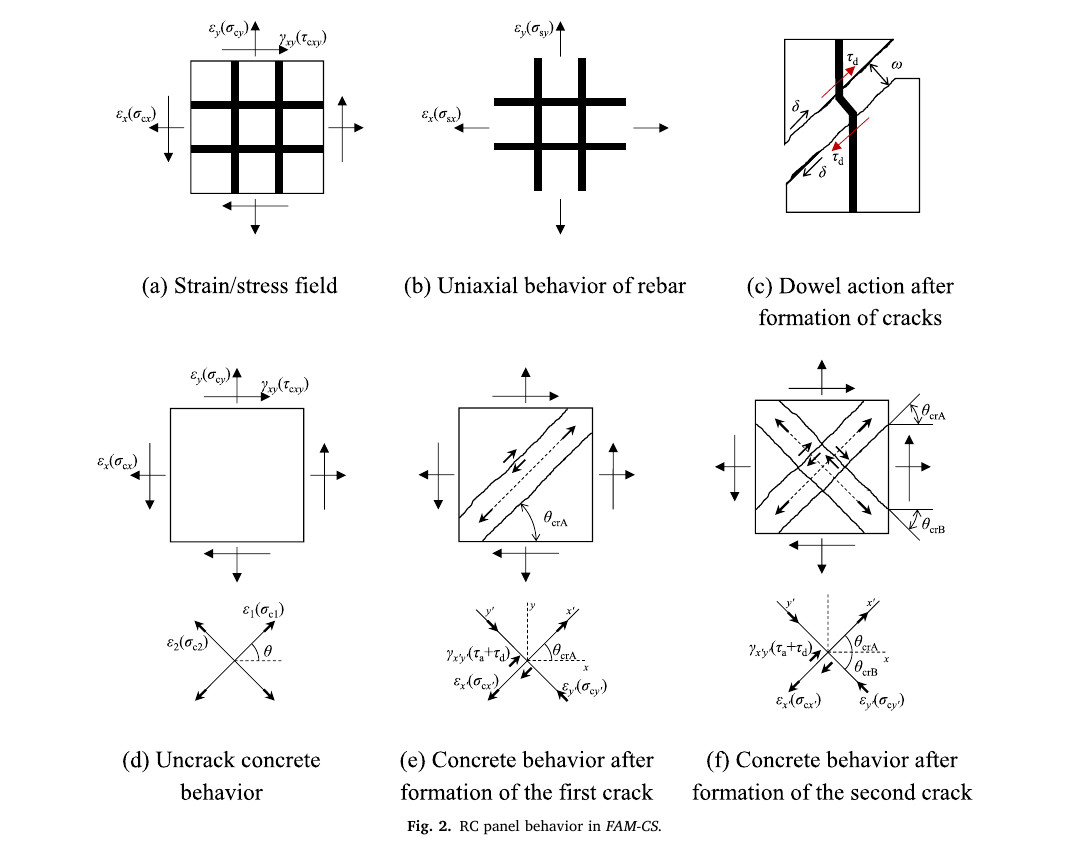
Fig. 3.1.6.6 Panel-level mechanisms represented by FAM_CS.
Command
nDMaterial FAM_CS $matTag $rho $sX $sY $conc $rouX $rouY $dY $Gamax $lm0 $sh
Parameter |
Type |
Description |
|---|---|---|
$matTag |
integer |
unique nDMaterial tag |
$rho |
float |
material density |
$sX |
integer |
tag of the uniaxialMaterial for horizontal x-direction reinforcement |
$sY |
integer |
tag of the uniaxialMaterial for vertical y-direction reinforcement |
$conc |
integer |
tag of the |
$rouX |
float |
reinforcement ratio in the horizontal x direction |
$rouY |
float |
reinforcement ratio in the vertical y direction |
$dY |
float |
diameter of vertical reinforcement |
$Gamax |
float |
maximum size of coarse aggregate |
$lm0 |
float |
calculated average crack spacing |
$sh |
float |
spacing of horizontal reinforcement |
Note
The concrete uniaxial material used for $conc must be ConcreteCM. The FAM_CS implementation uses response quantities supplied by ConcreteCM; other concrete uniaxial materials do not provide the required internal responses.
The following recorders are available with the FAM_CS material.
Recorder |
Description |
|---|---|
panel_strain |
panel strains \(\epsilon_x\), \(\epsilon_y\), and \(\gamma_{xy}\) |
panel_stress |
panel stresses \(\sigma_x\), \(\sigma_y\), and \(\tau_{xy}\) |
panel_stress_concrete |
concrete contribution to panel stresses |
panel_stress_steel |
reinforcement contribution to panel stresses |
strain_stress_steelX |
strain and stress of horizontal x-direction reinforcement |
strain_stress_steelY |
strain and stress of vertical y-direction reinforcement |
strain_stress_concrete1 |
strain and stress of concrete strut 1 |
strain_stress_concrete2 |
strain and stress of concrete strut 2 |
strain_stress_interlock1 |
strain and stress from crack sliding mechanism 1 |
strain_stress_interlock2 |
strain and stress from crack sliding mechanism 2 |
cracking_angles |
cracking angles for the crack systems |
Verification
The FAM_CS model was first validated using six reinforced concrete wall tests under coupled axial tension and cyclic lateral loads [Ji2018FAMCS] [Zhang2024FAMCS]. The comparisons below show the experimentally measured and simulated load-deformation responses for tensile wall specimens modeled with nDMaterial FAM_CS and quad elements.
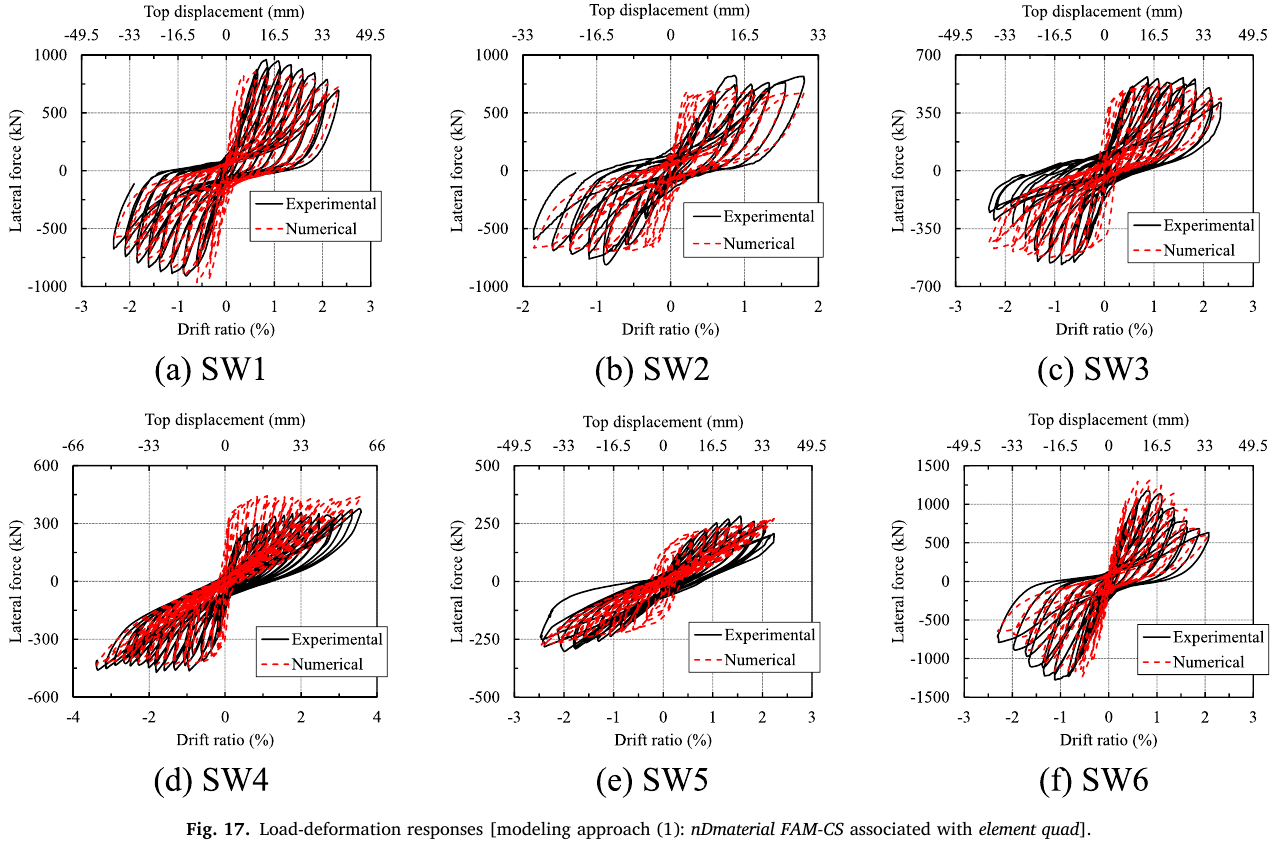
Fig. 3.1.6.7 Validation for tensile wall specimens under coupled axial tension and cyclic lateral loads.
Additional validation examples include 75 reinforced concrete wall tests under compression-flexure-shear and flexure-shear loading conditions. The following comparisons show validation against high-axial-compression T-shaped wall specimens [Ji2024FAMCS].
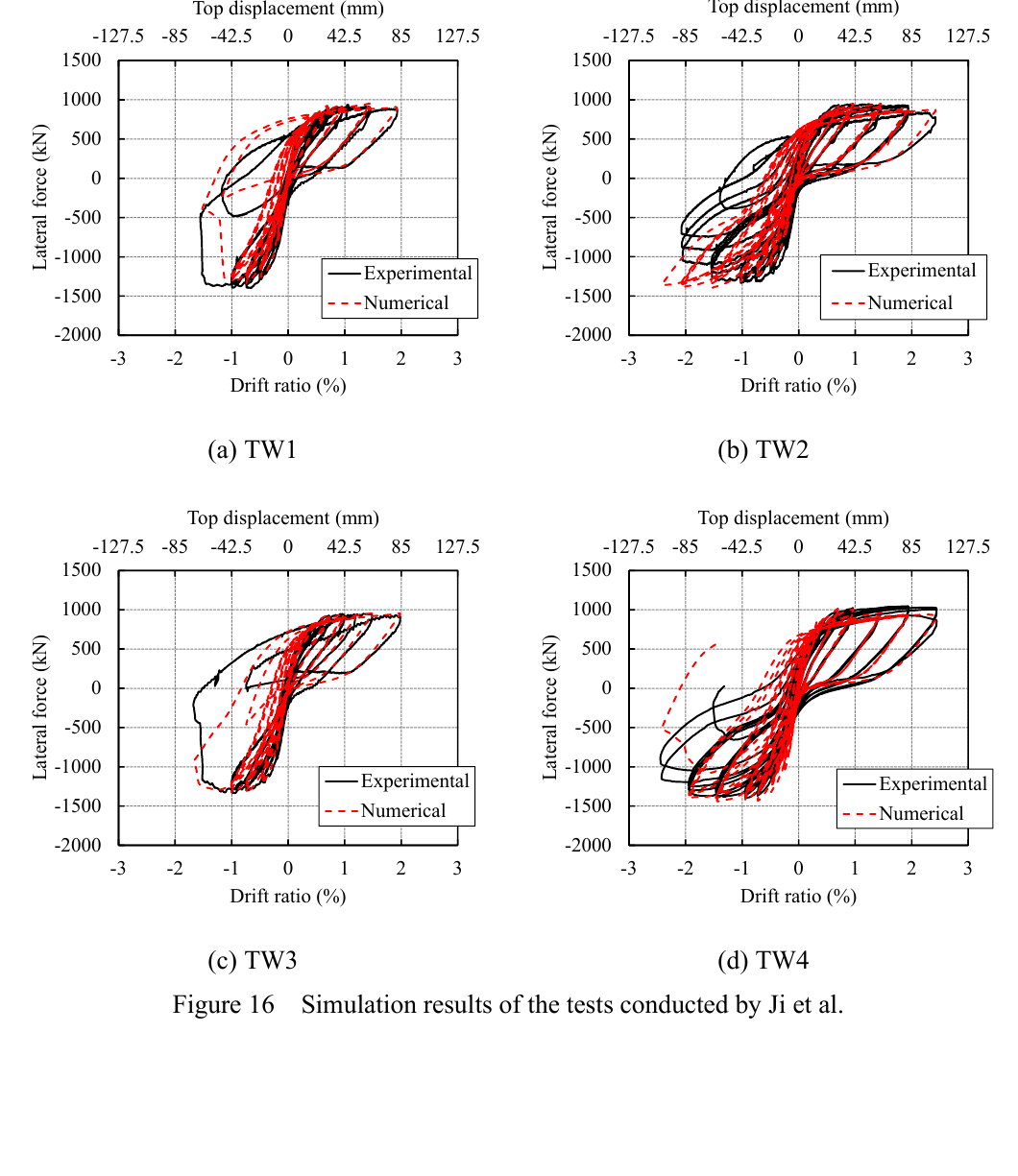
Fig. 3.1.6.8 Validation for high-axial-compression T-shaped wall specimens.
Examples
Download the SW1 Tcl example: FAM_CS_SW1Example.zip. The archive contains the Tcl input files and experimental hysteretic curve data; recorder output files are generated when the model is run.
The following commands define one concrete material, two reinforcing steel materials, and one FAM_CS material.
uniaxialMaterial ConcreteCM  2  -54.579  -0.005027  21714.2439  12  1.0134  2.1434  8e-05  1.2  10000
uniaxialMaterial SteelMPF  101  349  349  206000  0.005  0.005  20  0.925  0.15
uniaxialMaterial SteelMPF  103  397  397  206000  0.01  0.01  20  0.925  0.15

nDMaterial FAM_CS  201  0  103  101  2  0.0093084  0.056316  22  16  74.0814  100

recorder Element -file c_strain.out -time -eleRange 1 10 material 1 panel_strain
References
Zhang, S., Ji, X., Sun, L., Yu, Y., and Cheng, X. (2024). “New OpenSees material model for simulating reinforced concrete shear walls subjected to coupled axial tension and cyclic lateral loads.” Engineering Structures, 318, 118774. https://doi.org/10.1016/j.engstruct.2024.118774.
Ji, X., Cheng, X., and Xu, M. (2018). “Coupled axial tension-shear behavior of reinforced concrete walls.” Engineering Structures, 167, 132-142. https://doi.org/10.1016/j.engstruct.2018.04.015.
Ji, X., Sun, L., Wang, S., and Kolozvari, K. (2024). “Seismic behavior and modeling of T-shaped reinforced concrete walls under high axial force ratios.” Earthquake Engineering & Structural Dynamics, 53(3), 1085-1106. https://doi.org/10.1002/eqe.4060.
Maekawa, K., Pimanmas, A., and Okamura, H. (2003). Non-linear mechanics of reinforced concrete. Spon Press.