3.1.8.19. ConcreteCM Material
- uniaxialMaterial ConcreteCM $matTag $fpcc $epcc $Ec $rc $xcrn $ft $et $rt $xcrp <-GapClose $gap>
ops.uniaxialMaterial('ConcreteCM', matTag, fpcc, epcc, Ec, rc, xcrn, ft, et, rt, xcrp, <'-GapClose', gap>)
Argument |
Type |
Description |
|---|---|---|
$matTag |
integer |
unique uniaxial material tag |
$fpcc |
float |
compressive strength, \(f'_c\) (negative) |
$epcc |
float |
strain at the compressive strength, \(\varepsilon'_c\) (negative) |
$Ec |
float |
initial tangent modulus, \(E_c\) |
$rc |
float |
shape parameter of Tsai’s equation in compression, \(r_c\) |
$xcrn |
float |
non-dimensional critical strain on the compression envelope, \(\varepsilon^-_{cr}\), where the envelope becomes a straight line |
$ft |
float |
tensile strength, \(f_t\) |
$et |
float |
strain at the tensile strength, \(\varepsilon_t\) |
$rt |
float |
shape parameter of Tsai’s equation in tension, \(r_t\) |
$xcrp |
float |
non-dimensional critical strain on the tension envelope, \(\varepsilon^+_{cr}\), where the envelope becomes a straight line; a large value, e.g. 10000, is recommended to represent tension stiffening |
$gap |
integer |
gap closure: 0 less gradual, 1 more gradual (optional: default = 0) |
Discussion
This command is used to construct a ConcreteCM material [3] [5], the uniaxial hysteretic concrete model of Chang and Mander [2]. It is a refined, rule-based, generalized and non-dimensional model, whose monotonic and hysteretic parameters can be calibrated, and which represents confined and unconfined, ordinary and high-strength concrete, in cyclic compression and tension. It includes continuous hysteretic behaviour, progressive stiffness degradation with smooth unloading and reloading curves, and gradual crack closure.
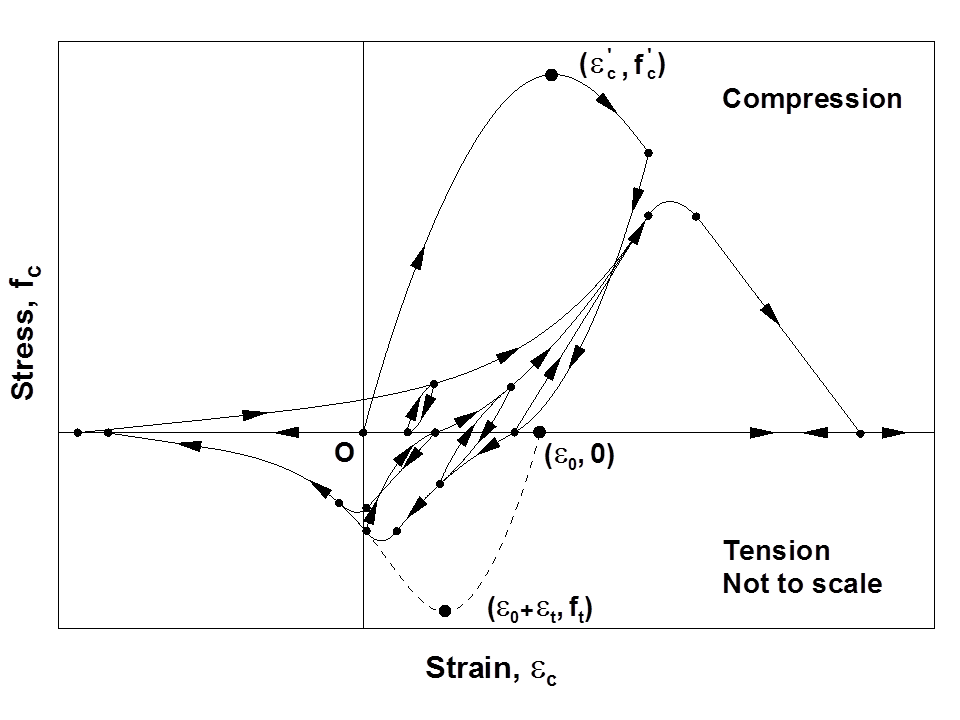
Fig. 3.1.8.39 Hysteretic constitutive model for concrete by Chang and Mander (1994)
The compression envelope is defined by the initial tangent \(E_c\), the peak point \((\varepsilon'_c, f'_c)\), the parameter \(r_c\) of Tsai’s equation [6], which defines the shape of the curve, and the normalized strain \(\varepsilon^-_{cr}\) beyond which the envelope is a straight line, down to zero stress at the spalling strain. Chang and Mander proposed empirical relations for \(E_c\), \(\varepsilon'_c\) and \(r_c\) for unconfined concrete; the parameters can also be calibrated to represent confined concrete, e.g. following Mander et al. [4].
The tension envelope has the same shape, but is shifted to a new origin based on the unloading strain from the compression envelope. It is defined by \(f_t\), \(\varepsilon_t\), \(r_t\) and \(\varepsilon^+_{cr}\), which can be calibrated, e.g. with the relations of Belarbi and Hsu [1], to represent tension stiffening.
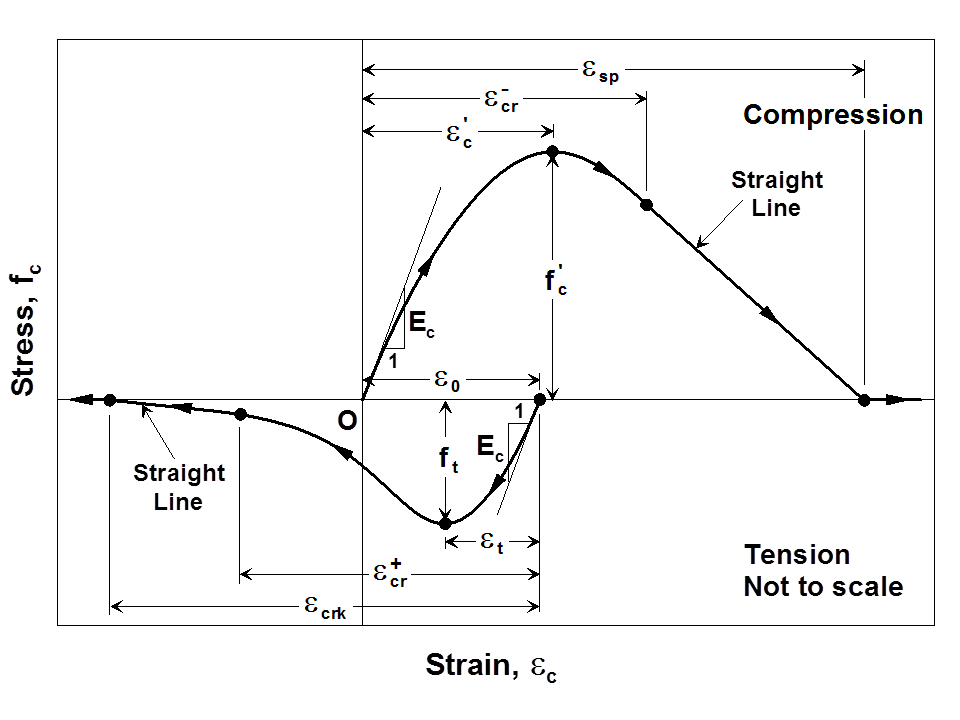
Fig. 3.1.8.40 Compression and tension envelope curves
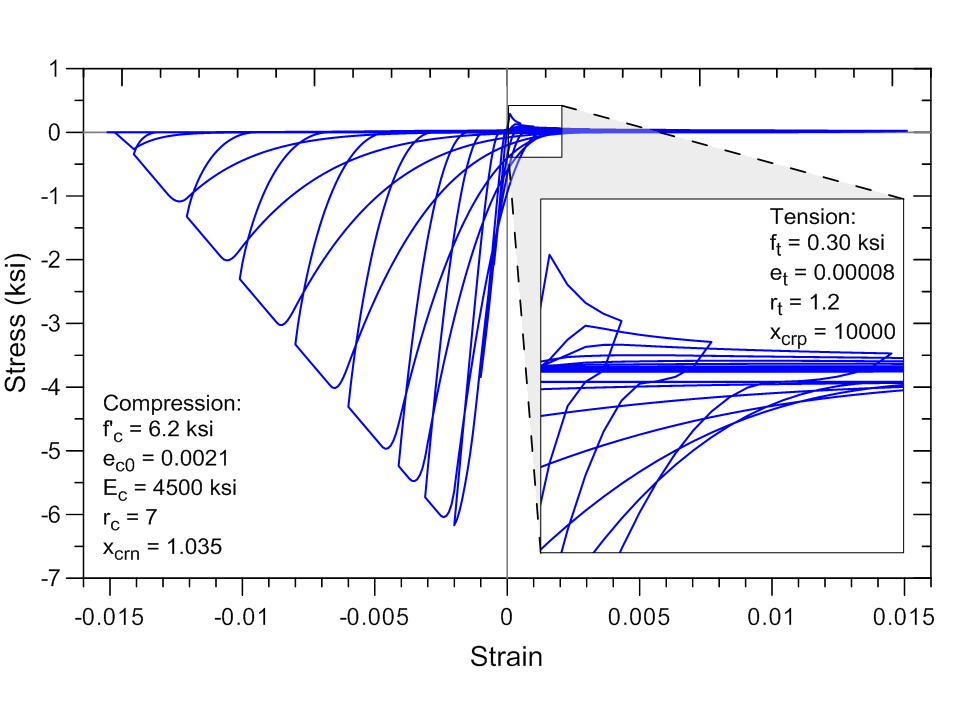
Fig. 3.1.8.41 Hysteretic stress-strain history generated by the model
The optional -GapClose parameter controls the intensity of gap (crack) closure, which affects the pinching of the lateral load-displacement response of RC walls. The original model uses a non-zero tangent at zero stress on unloading from the tension envelope (gap = 1, more gradual closure). The default, gap = 0, uses a zero tangent, which gives less gradual closure and is suitable for most analyses.
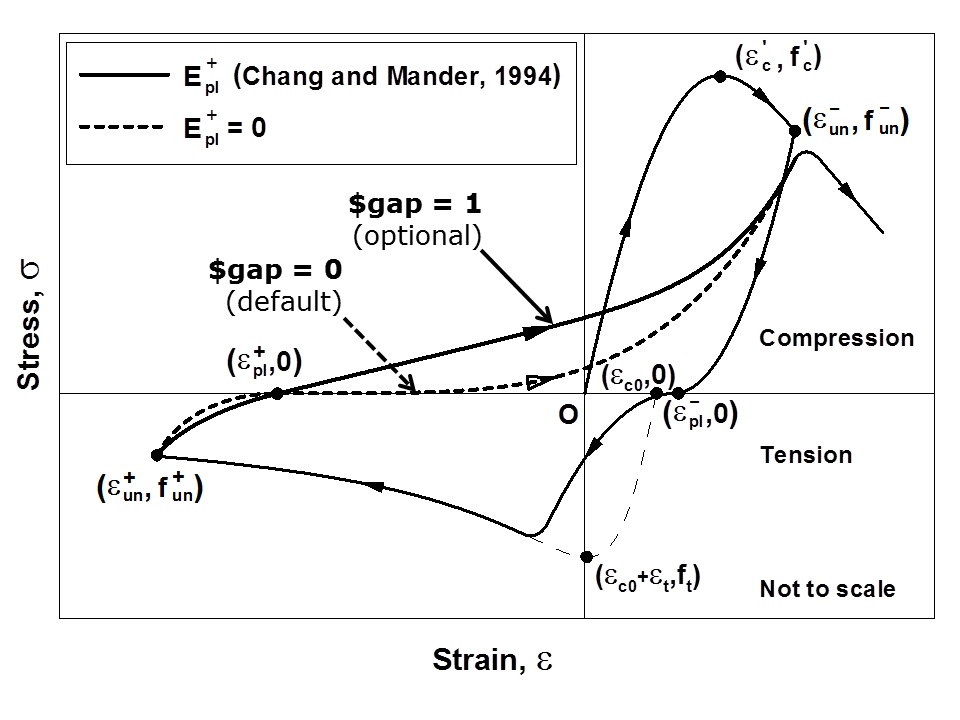
Fig. 3.1.8.42 Effect of the plastic stiffness on unloading from the tension envelope on crack closure
Concrete07 also implements the Chang and Mander model, but with simplified hysteretic rules; ConcreteCM implements the original unloading and reloading rules.
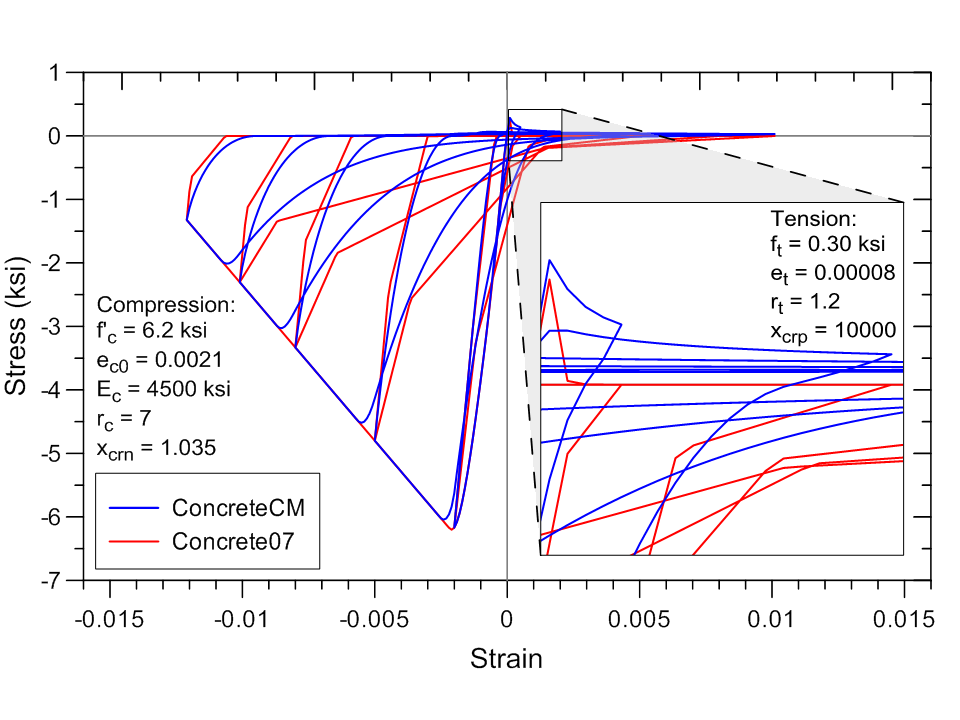
Fig. 3.1.8.43 Comparison of ConcreteCM and Concrete07
Note
The compressive parameters are negative.
An 11th argument, an integer 0 or 1, is also accepted: it switches the material to monotonic behaviour, and is used internally by the FSAM material. It is not intended for direct use.
Example:
The following example defines a ConcreteCM material in ksi units.
uniaxialMaterial ConcreteCM 1 -6.2 -0.0021 4500.0 7.0 1.035 0.30 0.00008 1.2 10000.0
ops.uniaxialMaterial('ConcreteCM', 1, -6.2, -0.0021, 4500.0, 7.0, 1.035, 0.30, 0.00008, 1.2, 10000.0)
Code Developed by: Kristijan Kolozvari, California State University, Fullerton, Kutay Orakcal, Bogazici University, and John Wallace, University of California, Los Angeles