3.1.8.79. HyperbolicGapMaterial Material
- uniaxialMaterial HyperbolicGapMaterial $matTag $Kmax $Kur $Rf $Fult $gap
ops.uniaxialMaterial('HyperbolicGapMaterial', matTag, Kmax, Kur, Rf, Fult, gap)
Argument |
Type |
Description |
|---|---|---|
$matTag |
integer |
unique uniaxial material tag |
$Kmax |
float |
initial stiffness |
$Kur |
float |
unloading and reloading stiffness |
$Rf |
float |
failure ratio |
$Fult |
float |
ultimate (maximum) passive resistance (negative) |
$gap |
float |
initial gap (negative) |
Discussion
This command is used to construct a HyperbolicGapMaterial material, a compression-only gap material based on the abutment stiffness models for bridges proposed by Wilson and Elgamal [3], from large-scale abutment tests on the UCSD outdoor shake table. The model is described for a 1.68 m (5.5 ft) tall backwall and a 1 m wide section of the abutment, to be scaled with the width. The hyperbolic force-displacement relation is based on the work of Duncan and Mokwa [1] and Shamsabadi et al. [2], with parameters calibrated from the tests; it matches the test data well up to 7.64 cm of longitudinal displacement:
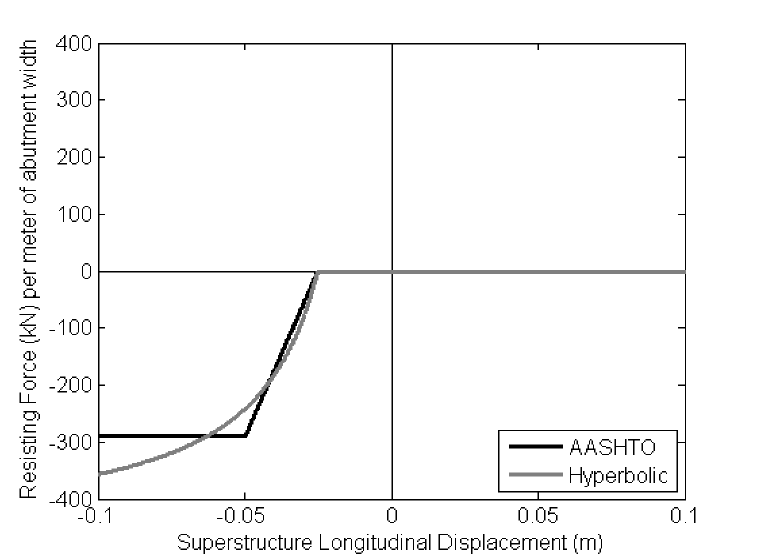
Fig. 3.1.8.85 Hyperbolic force-displacement relation
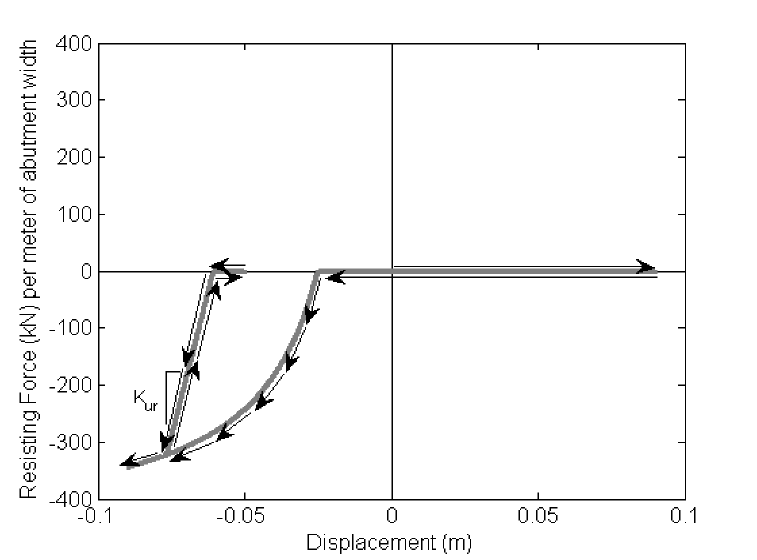
Fig. 3.1.8.86 Cyclic response
Note
The material is compression-only: $Fult and $gap are negative.
Recommended values, per meter of abutment width: \(K_{max}\) = 20300 kN/m, \(K_{ur} = K_{max}\), \(R_f\) = 0.7, \(F_{ult}\) = -326 kN, and a gap of -2.54 cm.
Example:
The following example defines the material with the recommended values for a 1 m wide abutment, in kN and m units.
uniaxialMaterial HyperbolicGapMaterial 1 20300.0 20300.0 0.7 -326.0 -0.0254
ops.uniaxialMaterial('HyperbolicGapMaterial', 1, 20300.0, 20300.0, 0.7, -326.0, -0.0254)
Code Developed by: Mathew Dryden, UC Berkeley, and Patrick Wilson, UCSD